
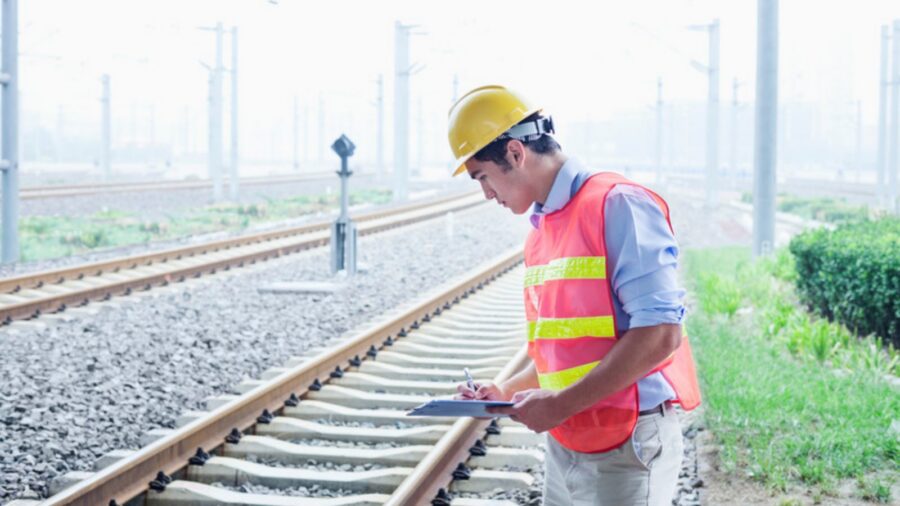
A freight train rolls past at 2 a.m. Someone is driving it, someone is coordinating the crew, someone made sure the signals were right. 🤔
Railroads train most of those people on the job. Here is what the roles are, what they ask for and what the schedule is really like.
👉 SEE HOW TO GET STARTEDYou stay on this siteWhat you’ll find here
✔️ What conductors and engineers do.
✔️ Signal and yard work.
✔️ The schedule, honestly.
✔️ What you need to start.
🧑✈️ Conductor
According to the U.S. Department of Labor (BLS), conductors coordinate the train crew. On passenger trains they look after travelers’ safety and comfort; on freight trains they oversee loading and unloading.
Conductors and yardmasters get up to twelve months of training on the job.
🚂 Locomotive engineer
Engineers drive the train between stations, watching speed, air pressure and the track ahead. Most of them start as conductors or yardmasters and work several years before moving up.
Engineers and conductors must be certified under Federal Railroad Administration rules, through the railroad that employs them.
👉 CHECK THE REQUIREMENTSTraining and where to look🚦 Signal, switch and yard work
Signal and switch operators install and maintain signals and watch track switches in rail yards. Yardmasters manage schedules and coordinate yard workers.
Yard work happens mostly outdoors, so it suits people who do not mind the weather.
🌙 The schedule, honestly
Trains run around the clock, so nights, weekends and holidays are part of the job. Most workers are full time, some work more than 40 hours a week, and crews on long routes may be away from home for long periods.
BLS notes that passenger crews on short routes usually have more predictable schedules, while some freight crews have irregular hours.
Seniority usually decides who gets the preferred shifts. That part matters for families: ask about it before you apply.
🧾 What you need to start
BLS says workers must be at least 21, pass a background check and pass random drug and alcohol tests. Most employers ask for a high school diploma or equivalent.
Here is what many people miss: you do not need a degree to start, because the railroad does the training.
⚠️ Watch out for fake offers
No real railroad charges you to apply or to train. If someone asks for money or your ID through a link, treat it as a possible scam. Apply only on the railroad’s own site.
Now you know the roles and the trade-offs. The next page goes through the requirements, the training and where openings are posted.
👉 START WITH STEP 1About two minutesQuick questions
Do I need a college degree?
No. Employers typically ask for a high school diploma or equivalent; training is on the job.
Is this a government website?
No. PlanoSimples is an independent guide. We do not post jobs or hire.
PlanoSimples is an independent publisher, not affiliated with any railroad, the Federal Railroad Administration, the U.S. Department of Labor or any government agency. We don’t post jobs, we don’t hire and we never ask for your details. Applications are made directly with each employer. Independent guide. Not affiliated with any government agency.